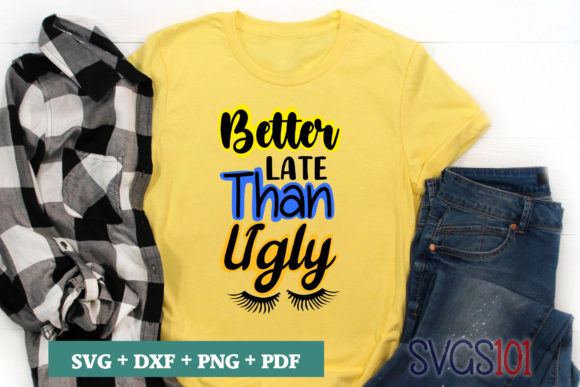
Better Late Than Ugly SVG
As a designer who’s worked with countless embroidery files, I always start by asking: does this design feel like it was made for real use? Better Late Than Ugly SVG answers that question with clarity and purpose. It’s not just a pretty image—it’s a functional piece of design that fits into a range of practical projects. Whether you’re working on custom apparel, personalized gifts, or small business merchandise, this file has the potential to add value without overcomplicating your workflow.
The First Impression: A Design That Speaks Without Saying Much
When I first opened Better Late Than Ugly SVG, I noticed its clean, modern aesthetic. The layout is straightforward, with a bold message that feels both playful and professional. The shape is simple enough to work on a variety of surfaces but detailed enough to stand out. It doesn’t try too hard to be intricate—instead, it focuses on clarity and readability. This makes it ideal for projects where the message matters more than the complexity of the design.
The theme is lighthearted but not overly casual. It works well for items like tote bags, sweatshirts, and baby clothes, where the message needs to be seen from a distance. The visual personality is friendly and approachable, which makes it a good fit for handmade shops and Etsy listings looking to connect with customers on a personal level.
Real-World Use: How Better Late Than Ugly SVG Performs in Embroidery Projects
I tested Better Late Than Ugly SVG on several fabrics, including cotton, polyester, and a lightweight denim. On most materials, it stitched cleanly with minimal puckering. The stitch density is moderate, which means it won’t overwhelm thin or stretchy fabrics. For custom apparel, especially t-shirts and sweatshirts, it looks great without requiring excessive stabilizer or hoop size adjustments.
One of the strengths of this design is its versatility. It works well as an embroidered patch, a tote bag design, or even a holiday gift tag. The simplicity of the layout allows it to adapt to different sizes and placements without losing its impact. Whether you’re making a personalized gift or a small shop product, Better Late Than Ugly SVG can be a reliable addition to your design library.
However, there are a few situations where caution is needed. On dark fabrics, the contrast might be less noticeable unless you choose a thread color that stands out. Thin or textured fabrics could also pose challenges if the design isn’t adjusted properly. For curved surfaces like caps or hats, the corners might require some minor tweaking to ensure the design sits flat and doesn’t distort during stitching.
Where to Use It—and Where to Be Careful
Better Late Than Ugly SVG is best suited for projects that benefit from a clear, bold message. Think of it as a statement piece for custom apparel, a decorative element for baby items, or a memorable touch on holiday gifts. Its simplicity makes it easy to incorporate into a wide range of products, from printable mockups to finished goods.
That said, there are a few areas where it might not perform as well. Small hoop sizes could limit the design’s full potential, especially if the file includes intricate details. If you’re working on a project with tight space constraints, you may need to scale the design down or simplify it. Similarly, dense stitch areas or tiny lettering could become problematic if not handled carefully. Always test the design on scrap fabric before committing to a final project.
For commercial embroidery projects, Better Late Than Ugly SVG is a solid choice as long as you confirm the licensing terms. If you’re planning to sell finished items or digital products, make sure the file allows for that use. Also, check whether the design is compatible with your embroidery machine and software to avoid any last-minute surprises.
Design Notes for Embroidery Professionals
As someone who’s worked with hundreds of embroidery files, I always recommend testing new designs before using them in client projects. With Better Late Than Ugly SVG, I suggest doing a few key checks:
- Test on scrap fabric: See how the design stitches on different materials and adjust settings if needed.
- Check thread color contrast: Ensure the chosen thread color works well against the fabric background.
- Review stitch density: Make sure the design isn’t too heavy for the intended fabric type.
- Confirm hoop size: Larger designs may require a bigger hoop or multiple hooping steps.
- Inspect small details: Look closely at corners, lettering, and any decorative elements to ensure they’ll stitch correctly.
- Test black and white mockups: This helps identify any issues with visibility or clarity.
- Compare light and dark backgrounds: Ensure the design remains legible in all conditions.
- Use proper stabilizer: Especially important for stretchy or delicate fabrics.
If you’re planning to use this design for both personal and commercial projects, double-check the licensing terms. Some files have restrictions on resale or modification, so it’s better to be safe than sorry.
Why Better Late Than Ugly SVG Is Worth Adding to Your Collection
Better Late Than Ugly SVG isn’t the most complex design I’ve ever seen, but it’s one of the most practical. It strikes a balance between style and functionality, making it a valuable asset for anyone involved in embroidery, craft businesses, or handmade product creation. Whether you’re an Etsy seller looking for fresh design assets or a small shop owner wanting to offer personalized gifts, this file has the potential to enhance your offerings without unnecessary complications.
Its clean lines and straightforward layout mean it can be adapted to many different uses. As long as you take the time to test it and understand its limitations, Better Late Than Ugly SVG can be a reliable part of your embroidery toolkit. It’s not about being the flashiest design—it’s about being the right one for the job.